



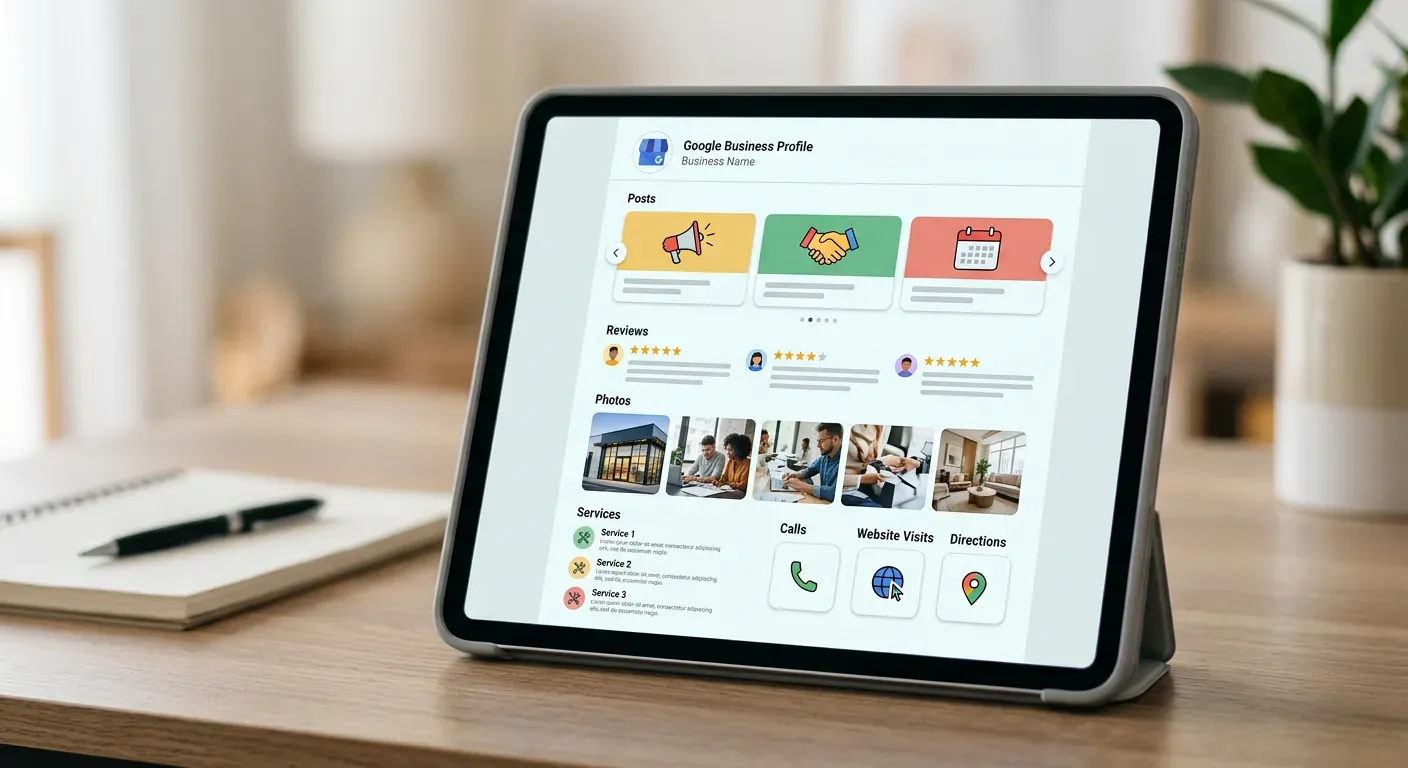
Your Google Business Profile can be one of the first places people interact with your company. They may see your reviews, hours, photos, services, directions, and contact information before they ever visit your website. But there’s another part of the profile that businesses can easily overlook: Google Business Profile posts. Regular posts give you another place to share updates, services, offers, events, and useful information directly on your profile.
Posting alone isn’t a shortcut to better rankings, and it shouldn’t replace a broader local search strategy. Still, posts can make your profile more informative and give potential customers more reasons to interact with your business. In this guide, we’ll cover where posts fit into GBP optimization, what makes them useful, what to publish, and how to connect them with your wider local marketing efforts.
GBP Posts Give Searchers More Reasons to Pay Attention
A Google Business Profile contains plenty of practical information. Still, the basics don’t always tell someone what’s happening with your company right now. Posts help fill that gap. You can use them to highlight current services, announcements, promotions, seasonal information, events, and educational content.
For example, an HVAC company heading into summer could publish information about AC maintenance. A remodeling company could highlight kitchen renovation services. A dentist could share information about a particular treatment.
Posts can support customer decisions
Someone searching locally may be comparing several companies at once. They’re looking at ratings. They’re reading reviews. They’re checking photos. They’re comparing services. Your posts become another touchpoint in that decision. A profile with useful, current information can give visitors more material to evaluate than a profile containing only basic company details. That doesn’t mean you need to post every day. It means the content you publish should have a purpose.
Don’t confuse activity with rankings
Publishing more posts doesn’t automatically mean Google will push your company higher in local search results. Google’s local results are influenced by broader factors, and posts are only one part of the overall profile experience.
That’s why Google Business Profile posts should support a larger strategy rather than become the entire strategy. Their value comes from helping communicate your offer, keeping information active, and creating additional opportunities for people to engage with your business.
Strong GBP Optimization Goes Far Beyond Posting
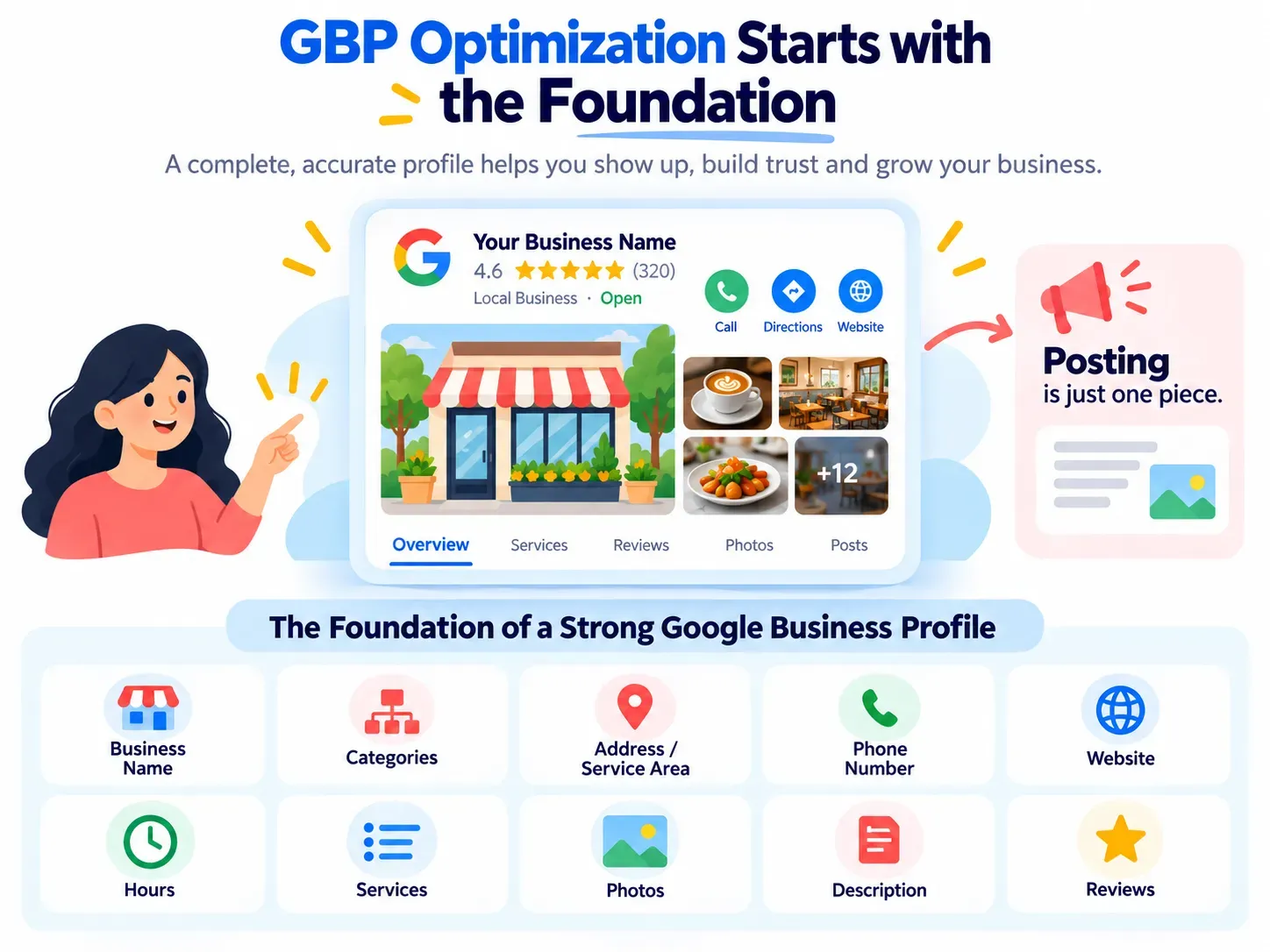
Posting three times a week won’t fix an incomplete profile. Before putting serious energy into content, build a strong foundation. Effective GBP optimization starts with accurate business information and a profile that clearly explains what you provide. Important areas include:
-
Business name
-
Primary and secondary categories
-
Address or service area
-
Phone number
-
Website
-
Business hours
-
Services
-
Photos
-
Business description
-
Reviews and responses
Each element helps create a more complete picture of your company.
Categories deserve attention
Your categories tell Google and potential customers what kind of business you operate. Choose the category that most accurately represents your primary service. Add relevant secondary categories when they genuinely apply. Don’t select unrelated categories simply because you want more visibility. Relevance matters more than trying to appear everywhere.
Keep services accurate
The services section gives you room to explain what you actually offer. If your business has added new services or stopped providing old ones, update the profile. The same principle applies to operating hours, phone numbers, URLs, and other customer-facing information.
Reviews add another layer of trust
Reviews can heavily influence how potential customers perceive a company. Develop a consistent process for requesting feedback from real customers and responding professionally to reviews. Positive or negative, responding shows that someone is paying attention. This creates a stronger foundation for the content you publish through your profile.
Make Posts Part of Your Local SEO Content Strategy
Your website content and Google Business Profile don’t need to live in separate worlds. They can support each other. That’s where posts can fit naturally into a broader local SEO plan.
Turn important services into post topics
Start with services that matter to your business. A roofing company might publish posts about:
-
Roof inspections
-
Storm damage
-
Roof repairs
-
Shingle replacement
-
Metal roofing
-
Gutter services
A marketing company could discuss:
-
SEO
-
PPC
-
Website design
-
Social media
-
Lead generation
-
Conversion tracking
You don’t need to stuff exact keywords into every sentence. Write naturally about the service and explain why it matters.
Use customer questions for educational posts
Your customers can provide an endless supply of content ideas. Pay attention to questions that repeatedly come through phone calls, emails, forms, reviews, and sales conversations.
A pest control company may constantly hear:
“Why do ants keep coming back?”
That’s a post.
A roofing contractor might hear:
“Can my roof be repaired, or does it need replacement?”
That’s another post.
An HVAC company may hear:
“Why is my AC running but not cooling?”
There’s your next topic.
This approach connects local SEO content with real customer needs rather than publishing something simply because the calendar says it’s time for another post.
Connect posts with your website
When appropriate, give people somewhere useful to go next. A post about roof repair could lead to a detailed roof repair service page. An educational post about SEO audits could lead to an SEO service page.
An announcement about a new service could direct visitors to a page explaining that service in more detail. The profile creates the interaction. Your website can continue the conversation.
Use Google Maps Marketing to Turn Visibility Into Action
Your Google Maps marketing efforts should help people move from seeing your company to taking a meaningful next step. Posts can support that process by focusing on specific customer needs.
Give each post one clear purpose
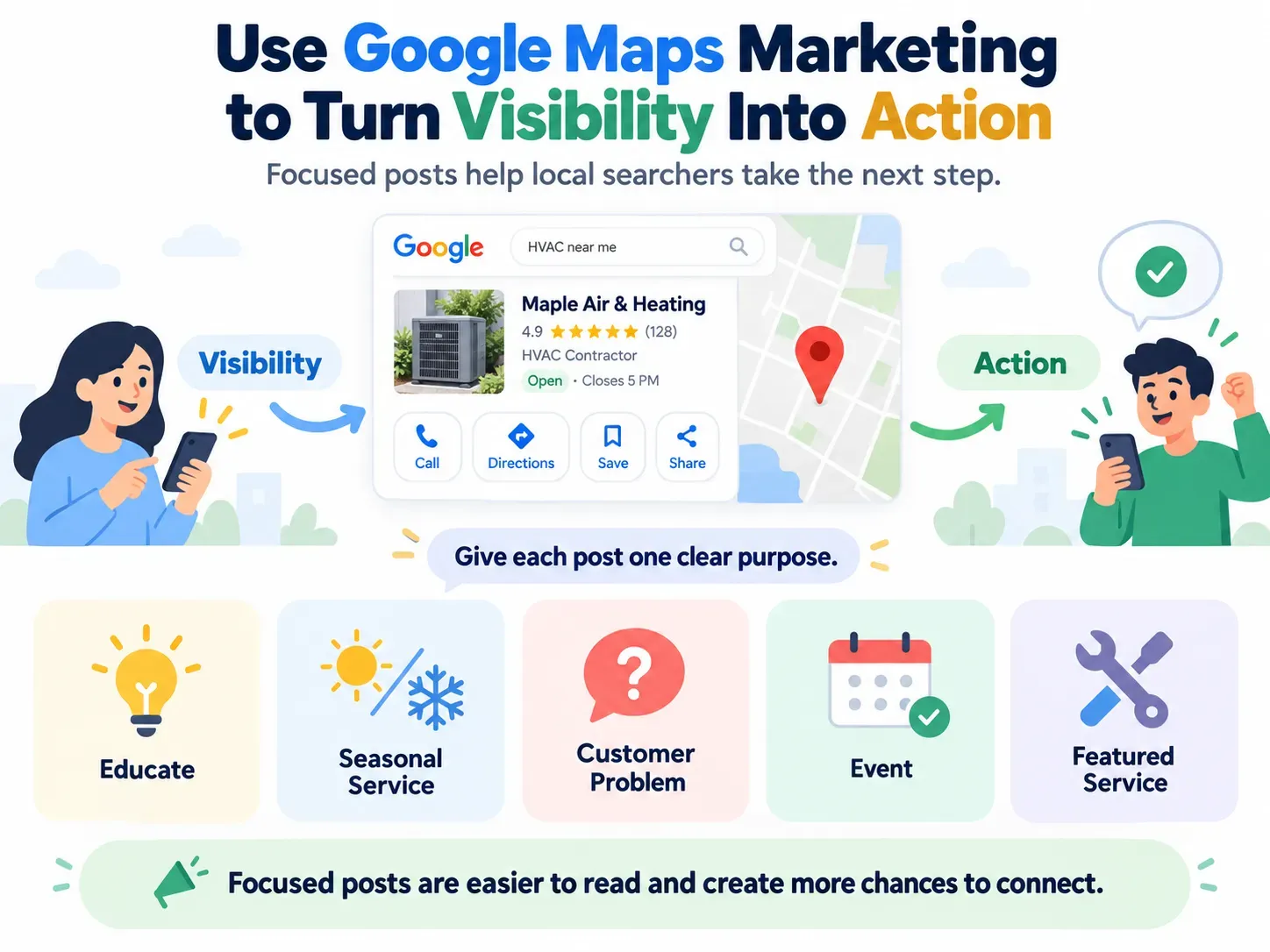
Trying to explain everything your company does in every post can weaken the message. Give individual posts a specific job:
-
One might educate.
-
Another could promote a seasonal service.
-
Another could highlight a customer problem.
-
Another might announce an event.
-
Another could feature a particular service.
Focused posts are easier to read and give you more opportunities to cover different parts of your business over time.
Write for people, not algorithms
Local marketing can become awkward when every sentence is written around a keyword. Keep posts conversational.
Instead of:
“Looking for AC repair services? Our AC repair services provide AC repair solutions for AC problems.”
Write something like:
“Your AC shouldn’t run nonstop just to keep the house comfortable. Weak airflow, dirty components, or refrigerant issues could be working against your system. Our team can identify the problem and recommend the right repair.”
The second version gives the reader information.
Add a clear next step
Depending on the post and available profile features, guide readers toward a logical action, such as visiting your website, learning about a service, calling your company, or booking an appointment. A clear next step connects content with business goals. That’s where Google Maps marketing becomes more than visibility. You’re building a path from search to action.
Build a Posting Strategy You Can Actually Maintain
Consistency matters more when it’s realistic. Publishing five rushed posts one week and disappearing for three months isn’t much of a content strategy. Create a schedule that your team can maintain.
Build a simple content mix
You don’t need a completely original concept every time you publish. Rotate between several useful categories. For example:
-
Service content: Explain individual services and the problems they address.
-
Educational content: Answer common questions and provide useful tips.
-
Seasonal content: Discuss services or problems that become relevant during certain times of the year.
-
Company updates: Share meaningful announcements, new services, events, or changes.
-
Trust content: Highlight completed work, customer experiences, team expertise, or other relevant proof when appropriate.
This gives your calendar variety without making content planning unnecessarily complicated.
Keep an eye on what people care about
Look at customer behavior across your wider digital presence:
-
Which services generate the most inquiries?
-
Which website pages receive strong engagement?
-
What questions keep appearing during sales calls?
-
Which seasonal problems generate demand?
Use those insights to guide future posts. This is where GBP optimization becomes an ongoing process instead of a one-time setup task. Your profile should change alongside your business and customer needs.
Give Your Local Visibility More Fuel
A Google Business Profile can influence how people experience your company before they ever reach your website. Leaving it outdated or treating posts like an afterthought can mean missing opportunities to educate potential customers, highlight relevant services, and create clearer paths toward contacting your business.
We know keeping profiles, websites, reviews, content, and search strategies moving together takes time. At Hite, we bring SEO, content, paid media, web strategy, and local marketing experience together to help businesses build stronger digital visibility. Explore Hite’s services or contact our team to put more energy behind your local presence.